 EN
EN

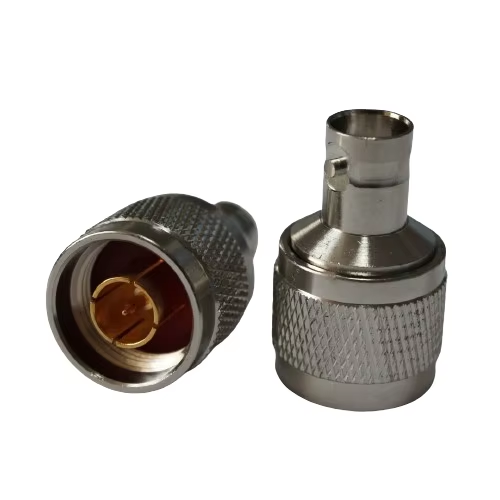
Analyzing Interconnection Discontinuities and Impedance Matching
When RF design engineers and laboratory technicians integrate microwave measurement setups, maintaining signal fidelity relies on the selection of every interconnected hardware component. Introducing physical transitions between coaxial lines or interface genders creates junction discontinuities that can disrupt wave propagation. A high performance RF adapter acts as a bridge designed to maintain characteristic impedance across the link. Industry consultants emphasize that minimizing reflections and voltage standing wave ratios at transition points helps prevent signal loss, ensuring that high frequency data streams travel smoothly without phase distortion across the circuit path in diverse operational settings.
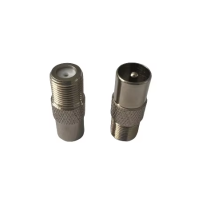
Evaluating Frequency Spectrum Limits and Dielectric Integrity
Coaxial interfaces possess physical boundaries regarding upper frequency thresholds, dielectric breakdown tolerances, and insertion loss characteristics. Selecting an appropriate RF adapter requires examination of internal PTFE insulator properties and gold plated center conductor geometry to ensure compatibility with transmission requirements. RF hardware durability analysts point out that lower tier conversion components often suffer from internal geometries that introduce signal attenuation when pushed into microwave frequency ranges. Verifying that transition hardware adheres to electrical band limits safeguards high frequency networks from parasitic capacitance, signal distortion, and bandwidth bottlenecks during operation across project deployments.
Managing Mechanical Mating Stress and Thread Longevity
Physical wear and tear associated with cable connections and disconnections places mechanical stress on coaxial interfaces within test environments. A durable RF adapter features robust body materials, such as nickel plated brass, engineered to withstand mating cycles without structural deformation. Facilities management specialists highlight that using precision machined coupling nuts and smooth internal threads prevents cross threading and micro gapping during equipment reconfiguration. Protecting the structural integrity of the interface guarantees continuous ground plane contact, eliminating connection dropouts and preserving hardware reliability in industrial test setups and communication stations.
Preventing Environmental Contamination and Insertion Loss
Exposure to ambient atmospheric humidity, airborne dust particles, and oxidation agents can degrade conductive metal surfaces inside microwave assemblies. Protecting an operational RF adapter from environmental elements involves utilizing protective caps and verifying that internal contact points remain pristine and free of microscopic debris. Environmental testing experts emphasize that particulate accumulation within the outer barrel can create capacitive coupling anomalies that drive up insertion loss. Implementing proactive cleaning protocols using isopropyl alcohol and lint free applicators preserves transmission characteristics across outdoor communication links and mobile base station deployments worldwide.
Partnering with Established Manufacturing and Supply Chain Leaders
Sourcing high frequency interconnection hardware depends on collaborating with seasoned manufacturing partners who understand the demands of microwave engineering. Partnering with an experienced production source ensures that every precision component meets international quality benchmarks and regulatory standards. By leveraging the advanced engineering capabilities, quality control protocols, and supply chain expertise of industry pioneers associated with AXRFCONNECTOR, hardware developers and telecom operators can acquire a dependable RF adapter solution that supports long term success worldwide.