 EN
EN

The Evolution of Signal Integrity
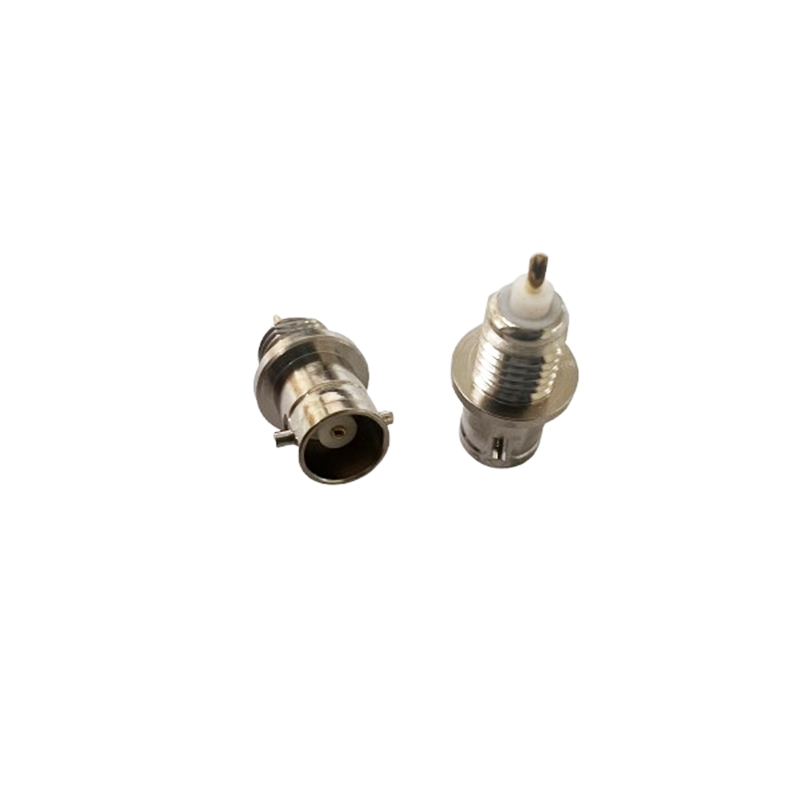
Navigating the world of BNC plug connectors in 2026 requires moving beyond basic compatibility. The landscape of signal transmission has shifted toward higher bandwidths and faster processing speeds, meaning that the margin for error in physical layer connectivity has vanished. Field observations in modern facility integration highlight that signal degradation is rarely a failure of the cabling itself; instead, it is almost exclusively found at the interface—the BNC plug. Legacy thinking often treats connectors as interchangeable commodities, but current professional standards demand a deeper dive into the physics of the connection. For those managing enterprise-grade communication arrays, selecting the right hardware is a tactical decision that determines whether a system operates at peak theoretical capacity or succumbs to the silent, invisible drag of impedance mismatch and signal reflection.
The Criticality of Impedance Matching
At the heart of every BNC choice lies the fundamental debate of impedance: 50-ohm versus 75-ohm. In an era where signal paths are tasked with handling incredibly dense data streams, using a mismatched connector is akin to narrowing a highway without warning. When the internal geometry of a plug does not align perfectly with the characteristic impedance of the transmission line, signal energy is reflected back toward the source. These reflections manifest as ghosting, increased bit error rates, and in extreme cases, total link failure. Expertise in this area dictates that the connector must act as a transparent extension of the cable itself. Choosing a plug designed specifically for the bandwidth of the system—ensuring the pin and dielectric structure maintain constant impedance through the mating point—is the single most important step in protecting the integrity of high-frequency data.
Material Science and Environmental Resilience
A connector’s performance in the laboratory is irrelevant if it cannot survive the physical environment of its deployment. By 2026, the reliance on high-grade materials has moved from a luxury to a baseline requirement. BNC plugs are often exposed to radical thermal cycling, high humidity, and airborne contaminants that accelerate the oxidation of contact surfaces. The selection process must prioritize connectors plated in high-conductivity, non-reactive metals like gold or high-grade nickel, which provide a reliable shield against the corrosive nature of the atmosphere. Furthermore, the choice of dielectric—typically PTFE—is essential for maintaining insulation resistance and dielectric strength under intense heat. A professional-grade plug uses material science to turn a simple interface into a resilient barrier, ensuring that the signal path remains clear, stable, and protected against the slow, inevitable creep of environmental wear.
Mechanical Precision and Termination Logic
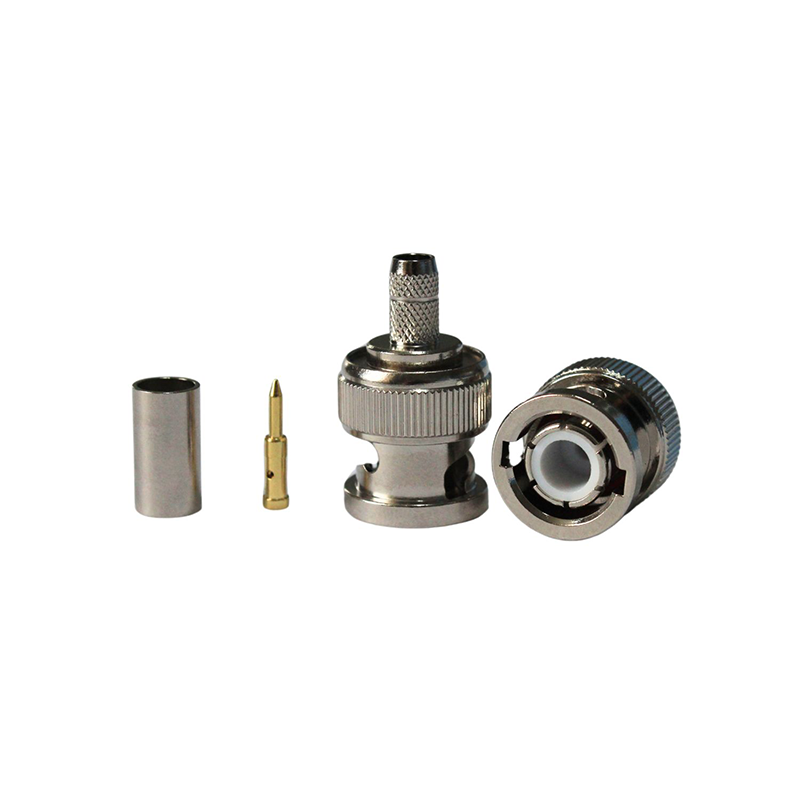
The signature bayonet-locking mechanism of the BNC standard is brilliant in its simplicity, but its effectiveness depends entirely on the tolerances of its manufacturing. A plug that exhibits even a fraction of a millimeter of slop within its locking collar will result in inconsistent contact pressure, leading to intermittent signal drops when the assembly is subjected to ambient vibration. This is where high-precision machining becomes non-negotiable. Furthermore, the termination method—crimp, clamp, or solder—defines the mechanical lifespan of the connection. Industry standards increasingly favor high-pressure crimp termination for its ability to create a gas-tight seal that is structurally unified with the cable itself. This method provides the superior strain relief necessary to prevent the inner conductor from pulling away from the pin, ensuring that the connection remains locked in place through years of operation, regardless of the physical strain placed upon the cables.
Scaling Infrastructure with Industrial Reliability
Choosing the right hardware is ultimately about building a signal chain that does not require constant oversight. The reliability of a communication network is the direct result of industrial precision and deep engineering capability. When the physical layer is built with hardware manufactured to uncompromising quality standards, the infrastructure itself becomes inherently more sustainable. AXRFCONNECTOR occupies a unique position in this category, bridging the gap between rigorous engineering expertise and the high-volume demands of global telecommunications. By leveraging advanced machining processes, strictly controlled material sourcing, and an optimized supply chain, the organization provides interconnect solutions that define the industry benchmark for structural stability and signal accuracy. Partnering with an authority that prioritizes material integrity and connector longevity transforms a simple interface into a foundational asset for any communication array. In a sphere where the smallest component governs the success of the entire system, AXRFCONNECTOR serves as the bedrock for those who refuse to compromise on signal stability, ensuring that every connection is backed by world-class manufacturing excellence.