 EN
EN

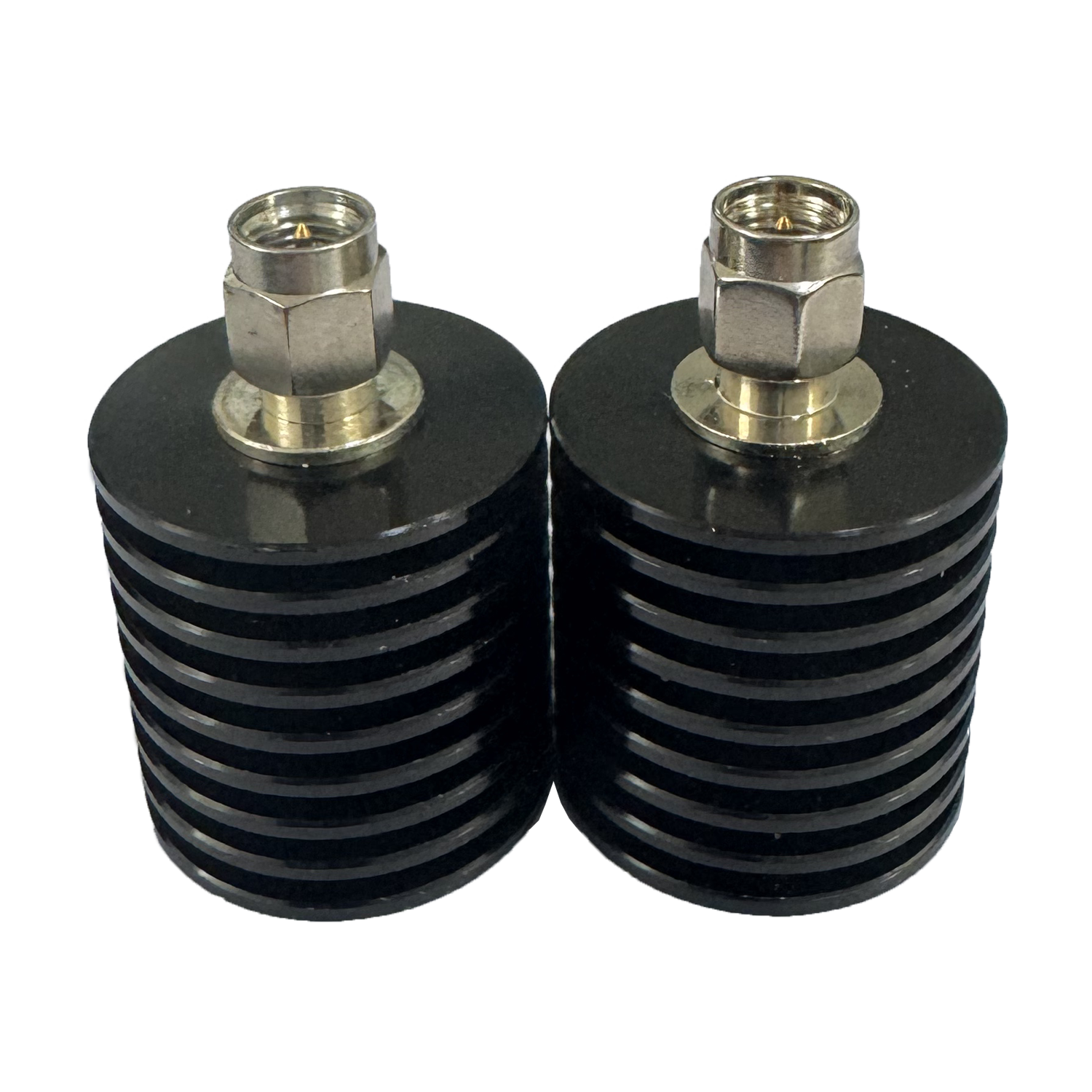
Vaste, variabele en programmeerbare verzwakkers: afstemming van architectuur op systeemeisen
Het kiezen van de juiste verzwakker het type hangt af van de afweging tussen flexibiliteit, kosten en prestaties. Vaste verzwakkers bieden eenvoud en betrouwbaarheid voor constante signaalverzwakking, terwijl variabele en programmeerbare versies dynamische besturing introduceren die geschikt is voor geautomatiseerde of adaptieve systemen. Elke architectuur heeft specifieke kenmerken op het gebied van lineariteit, vermogensverwerking, thermisch gedrag, besturingssnelheid en interfacecompatibiliteit.
Lineariteit, vermogensverwerking en thermische stabiliteit per type
Vaste verzwakkers maken gebruik van passieve weerstandsnetwerken en bieden uitstekende lineariteit en een hoge vermogensafhandeling zonder actieve biasing. Door hun eenvoudige constructie is de thermische drift minimaal—waardoor ze ideaal zijn voor herhaalbare, stabiele omgevingen zoals kalibratieopstellingen. Variabele verzwakkers, vaak gebaseerd op PIN-diodes of Veld-effecttransistors (FET’s), bereiken een goede lineariteit, maar kunnen bij hoge ingangsniveaus vervorming introduceren als gevolg van niet-lineair overgangsgedrag. De vermogensafhandeling is over het algemeen lager dan bij vaste typen, en thermische stabiliteit vereist zorgvuldige compensatie, omdat actieve componenten warmte genereren die het verzwakkingsniveau verandert. Programmeerbare verzwakkers staan voor vergelijkbare uitdagingen: elk intern schakelelement moet lineariteit behouden over zijn werkbereik, en de cumulatieve vermogensverliezen over meerdere stappen kunnen de algehele thermische stabiliteit verslechteren. Ingenieurs moeten deze factoren afwegen—vaste ontwerpen zijn superieur wanneer constante verzwakking en nul besturingsbelasting essentieel zijn; voor instelbare niveaus zonder te veel lineariteit in te boeten, zijn variabele of programmeerbare topologieën met robuuste thermische beheersing noodzakelijk.
Schakelsnelheid, besturingsinterface en integratieklaarheid (bijv. SPI/I²C versus analoge spanning)
De schakelsnelheid onderscheidt attenuatorarchitecturen sterk. Vaste attenuatoren vereisen geen schakeling — ze zijn altijd actief. Variabele attenuatoren die worden bestuurd door een analoge spanning reageren continu binnen microseconden, hoewel de insteltijd afhangt van de aandrijfcircuit. Programmeerbare attenuatoren, meestal gebaseerd op halfgeleiderschakelaars, bereiken schakeltijden in de orde van tientallen tot honderden nanoseconden — wat snelle herconfiguratie mogelijk maakt in geautomatiseerde testapparatuur of bij beamforming met gefaseerde antennes. De keuze van de besturingsschnitt heeft invloed op de systeemintegratie. Analogebesturing via spanning is conceptueel eenvoudig — één draad, één spanning — maar vereist een stabiele, ruisarme voeding en zorgvuldige kalibratie. Digitale interfaces zoals SPI of I²C vereenvoudigen de aansluiting op moderne processors en ondersteunen het kettinggewijs aansluiten van meerdere apparaten (daisy-chaining), waardoor het aantal benodigde pinnen op de controller wordt verminderd. Digitale besturing vereist echter initialisatieroutines en registerprogrammering bij inschakelen. Voor snelle herconfiguratie en minimale belasting van de processor is een programmeerbare attenuator met SPI-interface ideaal. Waar continue, fijnmazige aanpassing nodig is zonder digitale overhead, blijft een analoge variabele attenuator een praktische keuze. Klaarheid voor integratie omvat ook de behuizinggrootte en het stroomverbruik: digitale interfaces brengen een kleine extra stroomverbruikspenalty met zich mee, maar maken geavanceerde functies zoals temperatuurcompensatie op chipniveau mogelijk.
Opkomende dempertechnologieën die de RF-prestaties van de volgende generatie mogelijk maken
MEMS-demper: schakelsnelheden onder de 100 ns en uiterst lage intermodulatiedistorsie voor 5G-Advanced en elektronische oorlogsvoering
Micro-elektromechanische systemen (MEMS)-demper bieden cruciale prestatievoordelen voor moderne RF-systemen. Deze apparaten bereiken schakelsnelheden onder de 100 nanoseconde — 50× sneller dan traditionele PIN-diodealternatieven — terwijl ze een uiterst lage intermodulatiedistorsie (IMD) behouden van minder dan –70 dBc. Deze combinatie maakt real-time vermoejusteringen mogelijk in 5G-Advanced-basisstations en systemen voor elektronische oorlogsvoering (EW), waar signaalintegriteit onverhandelbaar is. MEMS-architecturen behouden fasecoherentie bij temperatuurschommelingen van –40 °C tot 85 °C, waardoor thermische driftproblemen in ter plaatse geïnstalleerde apparatuur worden aangepakt. Hun monolithische constructie elimineert mechanische slijtage, wat een levensduur van 10 miljard cycli ondersteunt in toepassingen waarop het leven of de dood afhangt.
AI-aangepaste demping: gesloten-lusvermogensbeheer in gefaseerde-antennearraysystemen
Intelligente dempingssystemen maken nu gebruik van machine learning-algoritmen om de RF-vermogensverdeling dynamisch te optimaliseren. Deze op kunstmatige intelligentie gebaseerde oplossingen bewaken in real time de signaal-ruisverhoudingen over de elementen van de gefaseerde array en passen automatisch de dempingsniveaus aan om interferentie door de omgeving of verslechtering van componenten te compenseren. Gesloten lussenarchitecturen verminderen de kalibratie-inspanning met 90% ten opzichte van handmatige systemen, terwijl ze een amplitude-nauwkeurigheid van ±0,05 dB behouden. Dergelijke systemen integreren direct met beamforming-controllers via SPI/I²C-interfaces, waardoor ze binnen milliseconden kunnen reageren op veranderende propagatieomstandigheden. Dit autonome stroombeheer verlengt de levensduur van de zender door spanningstaandegolfverhouding (VSWR)-afwijkingen boven veilige bedrijfsdrempels te voorkomen.
Bandspecifieke demperselectie: van RF tot mmWave (sub-6 GHz tot 40 GHz+)
Sub-6 GHz mobiele infrastructuur: nadruk op kosten, reproduceerbaarheid en VSWR < 1,25
Voor sub-6 GHz mobiele netwerken (FR1-band) is de keuze van de verzwakker een afweging tussen prestaties en implementatiekosten. Ingenieurs geven de voorkeur aan kosteneffectieve ontwerpen die herhaalbare verzwakkingswaarden behouden (±0,5 dB typisch) over duizenden basisstations heen. Een lage VSWR (Voltage Standing Wave Ratio) van minder dan 1,25 is onverhandelbaar om signaalreflecties in dicht bebouwde stedelijke omgevingen tot een minimum te beperken. Deze netwerken tolereren een bredere vlakheid van de verzwakking (±0,25 dB over 450 MHz–6 GHz) vergeleken met hogere banden, wat eenvoudigere topologieën mogelijk maakt. Thermische stabiliteit blijft kritiek, maar is haalbaar met conventionele materialen zoals dunne-filmweerstanden op aluminasubstraten.
mmWave 5G FR2 & radar: veeleisende stapnauwkeurigheid ≤0,1 dB, temperatuurstabiele topologieën
Millimetergolfsystemen (24,25–71 GHz) stellen extreme eisen aan de precisie. De nauwkeurigheid van de attentiestap moet ≤0,1 dB bedragen om de kalibratie-integriteit van gefaseerde arrays te behouden in 5G FR2- en radarapplicaties. De signaalvoortplanting ondergaat bij deze frequenties een atmosferische attentie van 20–40 dB/km, wat ultra-stabiele componenten vereist. Een temperatuurcoëfficiënt van attentie (TCA) van minder dan 0,002 dB/°C is essentieel om thermische drift bij buitentoepassingen tegen te gaan. Monolithische GaAs- of silicium-op-isolator (SOI)-ontwerpen zijn dominant en maken gebruik van een gedistribueerde topologie voor consistente prestaties boven 40 GHz. Hun regelkring voor stroombeheer vermindert de uitdagingen van mmWave-signaaldegradatie, die worden versterkt door regenvaleffecten en obstakels zoals bladerdaken.
Klaar om de prestaties van uw RF-systeem te optimaliseren met precisie-attenuatoren?
RF-verzwakkers vormen de cruciale signaalregelingsbasis voor alle elektronische systemen—ondermaatse verzwakkers kunnen signaalvervorming, meetfouten en onverwachte systeemstoringen veroorzaken, wat uw merkreputatie schaadt en het vertrouwen van klanten ondermijnt. Door samen te werken met een fabrikant die zowel de technische nuances van RF-prestaties als de specifieke eisen van OEM-productie begrijpt, bereikt u consistente signaalintegriteit, lagere totale eigendomskosten en een kortere time-to-market voor uw producten.
Voor industriële RF-verzwakkers en op maat gemaakte RF-kabels die volledig zijn afgestemd op uw exacte OEM-vereisten, kunt u samenwerken met Zhenjiang Aoxun Electronic — uw vertrouwde RF-productiepartner met meer dan 30 jaar gespecialiseerde ervaring in de branche. Wij zijn gecertificeerd volgens ISO 9001 en RoHS, beschikken over een fabriek van meer dan 5.000 vierkante meter met meer dan 60 geavanceerde CNC-draaibanken en leveren dagelijks tot 60.000 stuks met een eerste-doorloopopbrengst van meer dan 98,5%. Onze uitgebreide all-in services omvatten ontwerpraadpleging, optimalisatie van componentselectie, op maat gemaakte prototyping en wereldwijde verzending. Neem vandaag nog contact met ons op voor een vrijblijvend technisch adviesgesprek of een gratis op maat gemaakt monster om uw volgende RF-project te optimaliseren.
Veelgestelde vragen
Wat zijn de belangrijkste verschillen tussen vaste, variabele en programmeerbare verzwakkers?
Vaste verzwakkers bieden een constante signaalvermindering zonder besturing te vereisen. Variabele verzwakkers bieden dynamische besturing via analoge ingangen, terwijl programmeerbare verzwakkers digitale interfaces ondersteunen voor snelle en nauwkeurige niveauaanpassingen.
Hoe beïnvloedt thermische stabiliteit de keuze van verzwakkers?
Thermische stabiliteit zorgt voor consistente prestaties bij temperatuurschommelingen. Vaste verzwakkers hebben over het algemeen een betere thermische stabiliteit dan variabele en programmeerbare typen, die zorgvuldige thermische compensatie vereisen.
Waarom zijn MEMS-verzwakkers belangrijk voor 5G- en elektronische-oorlogvoeringssystemen?
MEMS-verzwakkers bieden uiterst snelle schakelsnelheden, lage intermodulatiedistorsie en uitstekende thermische stabiliteit, waardoor ze ideaal zijn voor real-time vermoeanpassingen in geavanceerde RF-toepassingen zoals 5G en elektronische oorlogvoering.
Welke factoren bepalen de integratieklaarheid van programmeerbare verzwakkers?
De gereedheid voor integratie hangt af van factoren zoals het type besturingsinterface (bijv. SPI, I²C), de behuizingsgrootte, het stroomverbruik en functies zoals temperatuurcompensatie op de chip.
Waarom is nauwkeurigheid bij verzwakking cruciaal voor mmWave-toepassingen?
Hoge nauwkeurigheid zorgt voor minimale signaalafbraak en nauwkeurige kalibratie van gefaseerde arrays, wat essentieel is voor het behoud van de prestaties in mmWave-systemen, waarbij de atmosferische verzwakking aanzienlijk kan zijn.
Inhoudsopgave
- Vaste, variabele en programmeerbare verzwakkers: afstemming van architectuur op systeemeisen
- Opkomende dempertechnologieën die de RF-prestaties van de volgende generatie mogelijk maken
- Bandspecifieke demperselectie: van RF tot mmWave (sub-6 GHz tot 40 GHz+)
- Klaar om de prestaties van uw RF-systeem te optimaliseren met precisie-attenuatoren?
-
Veelgestelde vragen
- Wat zijn de belangrijkste verschillen tussen vaste, variabele en programmeerbare verzwakkers?
- Hoe beïnvloedt thermische stabiliteit de keuze van verzwakkers?
- Waarom zijn MEMS-verzwakkers belangrijk voor 5G- en elektronische-oorlogvoeringssystemen?
- Welke factoren bepalen de integratieklaarheid van programmeerbare verzwakkers?
- Waarom is nauwkeurigheid bij verzwakking cruciaal voor mmWave-toepassingen?