 EN
EN

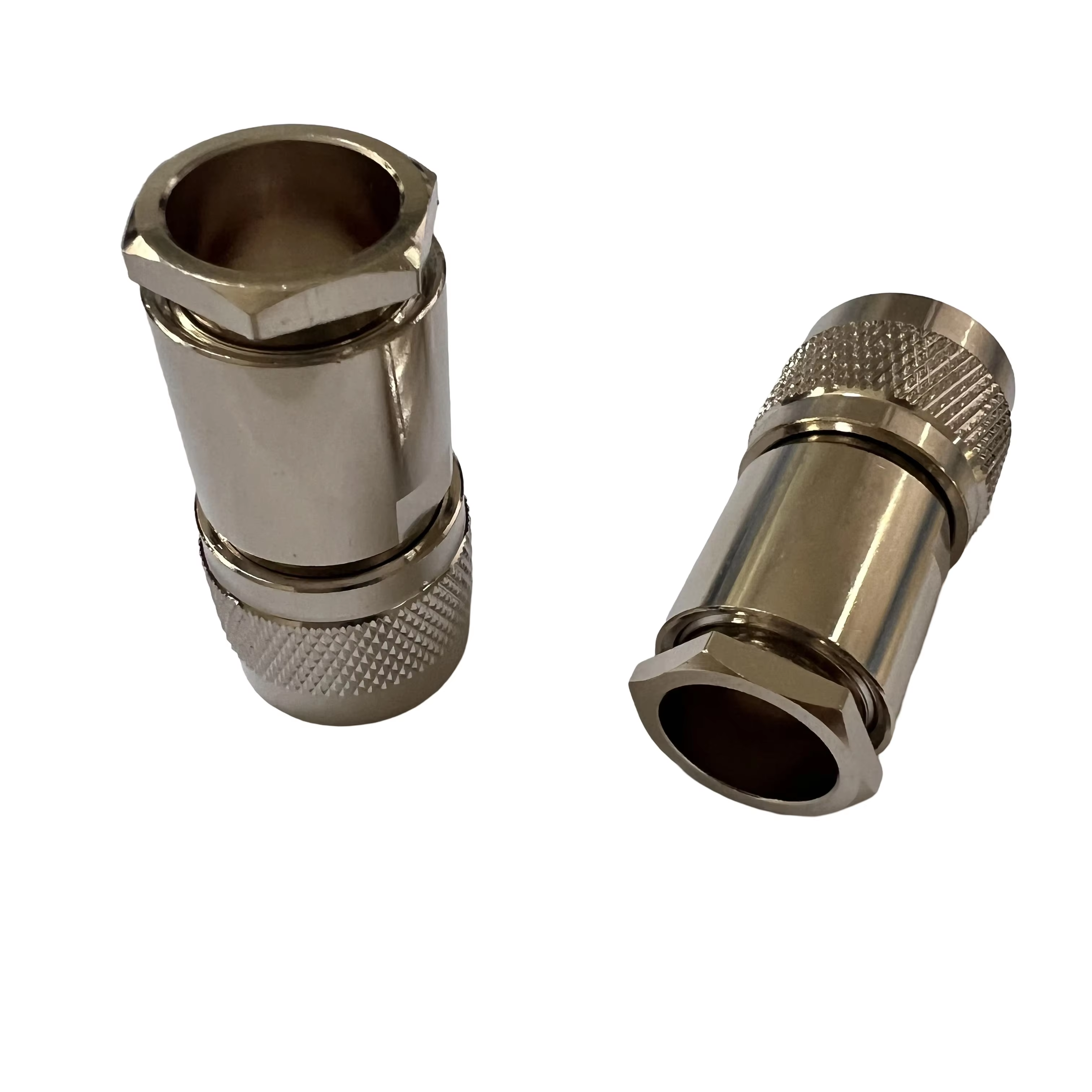
Why N Type Connector Specifications and Standards Matter for Wholesale Buyers
Core Electrical and Mechanical Requirements (50Ω Impedance, DC–11 GHz Range, VSWR <1.25)
When sourcing in bulk, wholesale buyers must prioritize connectors that meet foundational electrical and mechanical benchmarks—starting with 50Ω impedance, a DC–11 GHz frequency range, and a VSWR under 1.25. These parameters are not arbitrary: 50Ω ensures seamless integration with standard RF infrastructure; the 11 GHz upper limit supports microwave and 5G backhaul applications; and a VSWR below 1.25 reflects minimal signal reflection—directly translating to higher transmission efficiency and lower bit error rates. Mechanically, the 5/8-24 UNEF threaded coupling delivers robust, repeatable mating in vibration-prone or outdoor environments. The table below highlights the non-negotiable baseline specs:
| Parameter | Requirement |
|---|---|
| Impedance | 50Ω |
| Frequency Range | DC – 11 GHz |
| VSWR | <1.25 |
| Coupling Thread | 5/8-24 UNEF |
Verifying compliance with these specifications upfront prevents field failures, avoids costly system rework, and ensures interoperability across OEM platforms.
MIL-STD-348 and IEC 61169-8 Compliance: Non-Negotiable Benchmarks for Trusted N Type Connector Wholesale Manufacturer Selection
Compliance with MIL-STD-348 and IEC 61169-8 is the definitive marker of a credible N type connector wholesale manufacturer—not just a checkbox, but a functional guarantee. MIL-STD-348 defines precise interface geometry, mechanical tolerances, and environmental performance criteria for military-grade RF components, while IEC 61169-8 establishes standardized test methods for insertion loss, durability, and repeatability. Together, they ensure dimensional compatibility, long-term mating reliability, and consistent RF behavior across suppliers and generations. Buyers should require documented certification—not just self-declared conformity—and verify that testing is performed per clause requirements (e.g., IEC 61169-8 Annex B for VSWR sweep validation). Skipping this due diligence risks mismatched interfaces, accelerated wear, and elevated total cost of ownership—especially in aerospace, defense, and critical telecom deployments.
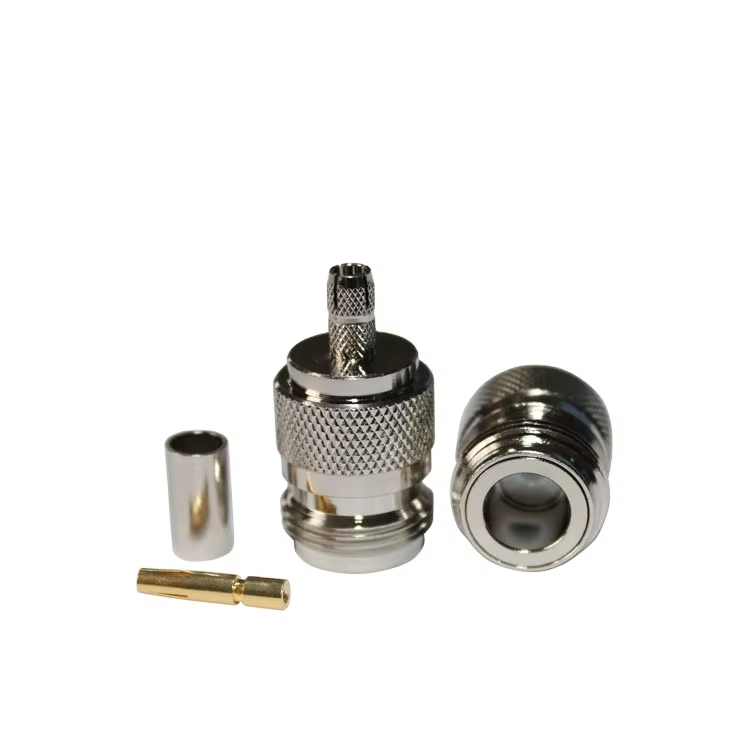
How Configuration Flexibility and Material Options Impact Bulk Sourcing Decisions
For wholesale buyers, configuration versatility and material intelligence directly influence scalability, lifecycle cost, and system-level performance. A capable supplier doesn’t just stock variants—it engineers them with purpose, enabling buyers to align connector selection with assembly strategy, environmental demands, and budget constraints.
Gender, Mounting Style, and Orientation Variants (Panel-Mount, Bulkhead, Right-Angle) in High-Volume Orders
High-volume procurement thrives on standardization—but only when standardization serves function. Panel-mount connectors streamline chassis integration in base stations and broadcast gear; bulkhead variants provide secure, shielded feedthroughs in enclosures and cabinets; right-angle configurations conserve board space in dense RF modules and small-cell radios. Crucially, the ability to combine male/female genders, mounting types, and orientations within a single order reduces SKU fragmentation, eliminates adapter dependencies, and accelerates time-to-deployment. Leading manufacturers maintain dynamic inventory matrices and configurable BOM tools—enabling buyers to scale mix-and-match orders without sacrificing lead time or unit economics.
Cost-Performance Trade-offs: Brass vs. Stainless Steel Bodies; Gold vs. Silver Plating for RF Reliability
Material decisions carry measurable RF and operational consequences—not just price tags. Brass bodies offer an optimal balance of conductivity, machinability, and cost for indoor or controlled-environment applications. Stainless steel, while 30–50% more expensive, delivers superior tensile strength, salt-spray resistance (per ASTM B117), and thermal stability—making it essential for maritime, tower-mounted, or desert-deployed systems. Similarly, gold plating provides stable, oxidation-resistant contact surfaces critical for maintaining low insertion loss and repeatable VSWR up to 11 GHz—even after thousands of mating cycles. Silver plating offers near-identical bulk conductivity at lower cost but requires protective packaging and is vulnerable to sulfide tarnish in industrial or coastal settings. A trusted wholesale manufacturer clearly articulates these trade-offs—not as marketing options, but as application-specific engineering recommendations backed by environmental test data.
Manufacturing Capabilities That Define a True N Type Connector Wholesale Manufacturer
Scalable Production Infrastructure: Precision Tooling, Automated Assembly, and Batch Traceability
A true wholesale manufacturer operates beyond order fulfillment—it functions as an extension of the buyer’s supply chain. This requires scalable infrastructure grounded in precision tooling (CNC machining centers with ≤±0.01 mm positional accuracy), high-speed automated assembly lines for consistent center-pin alignment and dielectric retention, and full batch traceability from raw-material lot to finished connector. Every shipment includes a traceability code linking component history to inspection reports, plating logs, and RF test data. In-house secondary processes—including electroplating, RF validation, and environmental stress screening—are mandatory, not optional: outsourcing these steps introduces variability, delays, and accountability gaps. This integrated capability enables telecom and defense buyers to confidently place million-unit orders—knowing each connector meets specification, every time.
Process Control for Consistency: Tight Tolerance Management (<±0.02 mm) Across Injection-Molded and CNC-Machined Components
RF performance hinges on dimensional fidelity—and ±0.02 mm isn’t aspirational, it’s foundational. Achieving this across both metal (CNC-machined) and polymer (injection-molded) components demands rigorous statistical process control (SPC), real-time metrology feedback, and measurement systems calibrated to the 10:1 rule (e.g., CMMs with ±0.002 mm accuracy). Capability studies (Cpk ≥1.33) are conducted regularly—not just at launch, but for every production run. Deviations outside this window risk impedance discontinuities, mode conversion, and VSWR spikes—particularly above 6 GHz. A mature manufacturer treats tolerance control as a closed-loop discipline: deviations trigger root-cause analysis, not just rework. That discipline is what separates connectors that pass spec from those that perform reliably across temperature, vibration, and repeated mating cycles.
Quality Assurance Protocols That Validate Wholesale Manufacturer Credibility
Selecting a dependable N type connector wholesale manufacturer means evaluating how quality is embedded—not audited. A credible supplier operates under a certified Quality Management System (QMS), such as ISO 9001 or AS9100D, with documented procedures covering material qualification, in-process inspection, final RF validation, and corrective action management. But certification alone is insufficient. What matters is how quality is validated at the RF level—and whether evidence is actionable, not anecdotal.
| Quality Assurance Pillar | Description |
|---|---|
| Certifications | Third-party-validated QMS (e.g., ISO 9001, AS9100D) ensures systematic control from incoming materials through final inspection and documentation. |
| Testing Procedures | Every lot undergoes dimensional verification, pull-test validation, and swept-frequency RF testing—including VSWR and insertion loss across DC–11 GHz—with pass/fail thresholds aligned to MIL-STD-348 and IEC 61169-8. |
| Continuous Monitoring | In-process checks at critical stages (e.g., plating thickness, torque verification, center-conductor concentricity) combined with batch-level traceability reduce variation and enable rapid containment if anomalies arise. |
Beyond compliance, look for suppliers who publish representative RF test reports—not just summaries, but full swept-frequency plots showing impedance stability and VSWR minima. Also confirm environmental screening: thermal cycling (-40°C to +85°C, 500 cycles) and broadband vibration profiling (per MIL-STD-810H) validate mechanical integrity under real-world stress. When these protocols are consistently applied—and transparently documented—they transform quality from a claim into a verifiable, repeatable outcome.
FAQ
What are the key specifications to consider for N type connectors when buying wholesale?
The key specifications include 50Ω impedance, a frequency range from DC to 11 GHz, and a VSWR of less than 1.25. These ensure seamless integration, minimal signal reflection, and high transmission efficiency.
Why is compliance with MIL-STD-348 and IEC 61169-8 important?
These standards define precise specifications for military-grade components and test methods for RF components, ensuring long-term reliability, dimensional compatibility, and consistent RF performance.
How do material choices affect the performance of N type connectors?
Materials like brass and stainless steel have differing benefits in terms of strength, resistance, and cost. Similarly, gold and silver plating offer various levels of conductivity and resistance to tarnish.
What manufacturing capabilities should a credible N type connector wholesale manufacturer have?
A credible manufacturer should have scalable production, precision tooling, automated assembly, and batch traceability, ensuring consistency and quality in mass production.
Table of Contents
- Why N Type Connector Specifications and Standards Matter for Wholesale Buyers
- How Configuration Flexibility and Material Options Impact Bulk Sourcing Decisions
- Manufacturing Capabilities That Define a True N Type Connector Wholesale Manufacturer
- Quality Assurance Protocols That Validate Wholesale Manufacturer Credibility
- FAQ