 EN
EN

Practical Field Experience with UHF Connector Radio Deployments
RF field technicians and radio system integrators consistently encounter subtle performance issues that trace directly back to improperly selected UHF connector components. In years of hands-on radio network deployment and maintenance work, minor connection inconsistencies, intermittent signal dropouts, and short-lived system failures have repeatedly linked to low-quality or misapplied UHF connector units, rather than core radio equipment faults. Many industry practitioners underestimate how much a single UHF connector impacts overall radio system stability, often prioritizing main transceiver hardware while overlooking the critical role of coaxial interconnects. A reliable UHF connector acts as the foundational bridge between antennas, coaxial cables, and radio transceivers, making targeted component selection a non-negotiable step for long-term radio network functionality. Real-world field data confirms that standardized, high-grade UHF connector hardware drastically reduces unplanned maintenance and signal instability across diverse radio operation environments.
Professional Engineering Principles Behind UHF Connector Functionality
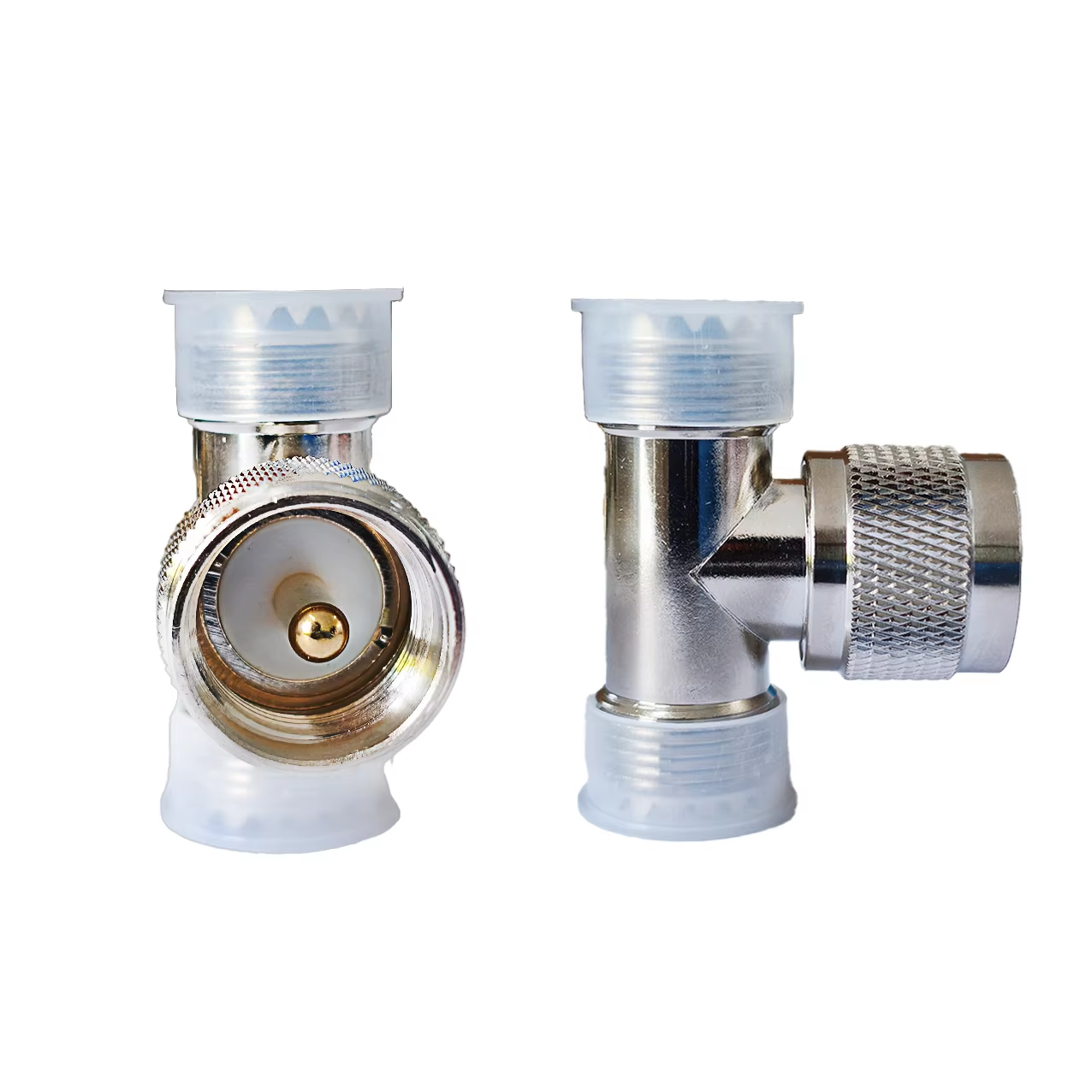
Deep technical understanding of UHF connector design differentiates professional system builds from generic, low-performance radio setups. Unlike precision wideband RF connectors, the conventional UHF connector features an air-gap dielectric structure with variable impedance characteristics, a core design trait that defines its functional boundaries. Specialized RF engineering guidelines confirm that the UHF connector delivers optimal signal integrity and stable power transmission exclusively within sub-300MHz frequency bands, covering the majority of civilian and commercial radio communication spectrums. Structurally, a high-performance UHF connector relies on precision CNC-machined brass housing to ensure rigid structural stability and uniform electrical conductivity. Complementary surface treatments including nickel plating for outer corrosion resistance and gold plating for internal contact conductivity eliminate common failure modes like oxidation, high contact resistance, and signal attenuation. Paired with high-temperature PTFE dielectric insulation, the UHF connector maintains consistent internal geometry even under continuous operational load and fluctuating environmental conditions.
Authoritative Performance Standards for UHF Connector Radio Usage
Global RF industry institutions and telecommunications experts have established unified performance benchmarks to standardize UHF connector application in radio systems. Professional RF testing protocols mandate vector network analyzer testing for all UHF connector batches to verify critical metrics including return loss, insertion loss, and VSWR consistency before formal system integration. Exceeding the rated frequency range of a standard UHF connector will inevitably cause sharp VSWR elevation, severe signal reflection, and reduced power transmission efficiency, which can even damage radio transceiver equipment in high-power operation scenarios. Authoritative quality certification systems including ISO9001 quality management and RoHS material compliance further standardize UHF connector production, ensuring material safety, dimensional accuracy, and stable batch-to-batch performance. These industry-wide standards provide reliable reference points for engineering teams to screen qualified UHF connector hardware for commercial and industrial radio projects.
Diversified Radio Application Scenarios for UHF Connector Hardware
The versatile structural design of the UHF connector enables its widespread adoption across mainstream radio communication scenarios. Multiple form factors including straight, right-angle, and adapter-style UHF connector variants adapt to diverse on-site installation limitations and wiring layouts, catering to fixed radio base stations, mobile radio devices, and temporary emergency radio networks. Common models such as the UHF male-to-female and male-to-male UHF connector simplify rapid cable assembly and equipment docking for radio system construction. Both solder-type and crimp-type UHF connector structures support flexible on-site assembly, allowing technicians to customize cable connections according to actual project needs. Whether for daily commercial radio communication or short-term field radio deployment, the adaptable UHF connector structure delivers stable, low-latency signal transmission suitable for universal radio interconnection needs.
Key Selection Criteria for Stable UHF Connector Long-Term Operation
Successful radio system deployment hinges on comprehensive UHF connector evaluation that balances material quality, electrical performance, mechanical durability, and manufacturing reliability. Low-cost, inferior alloy UHF connector products often suffer from accelerated corrosion, thread loosening, and structural deformation after short-term outdoor or high-load use, triggering persistent signal faults. Professional procurement and engineering teams prioritize verified manufacturing quality and standardized performance data over simple unit-price comparisons. Strict dimensional tolerance control, full-process performance testing, and complete material traceability are core indicators for screening high-quality UHF connector hardware. Reasonable matching between UHF connector specifications and coaxial cable models also avoids signal distortion caused by structural mismatch, maximizing the overall operational efficiency of radio systems.
Reliable Manufacturing and Supply Advantages of Premium UHF Connector
Consistent UHF connector performance for large-scale radio infrastructure projects depends entirely on mature manufacturing capabilities and standardized quality control systems. Advanced processing equipment, complete in-house testing laboratories, and standardized production workflows ensure stable quality output for every UHF connector batch. As an experienced RF connector manufacturer with decades of industry accumulation, Aoxun implements full-process quality verification from raw material screening and precision machining to surface plating and finished product testing. The brand’s robust production capacity and stable global supply chain support bulk and customized UHF connector supply for various radio communication projects, delivering high-consistency, long-durability components for global radio system integrators and equipment manufacturers.
Table of Contents
- Practical Field Experience with UHF Connector Radio Deployments
- Professional Engineering Principles Behind UHF Connector Functionality
- Authoritative Performance Standards for UHF Connector Radio Usage
- Diversified Radio Application Scenarios for UHF Connector Hardware
- Key Selection Criteria for Stable UHF Connector Long-Term Operation
- Reliable Manufacturing and Supply Advantages of Premium UHF Connector